The Life and Times of Pioneer Bandmaster, Musician, and Composer: Felix Villiet Vinateri
Although the Oral History Project consists primarily of University of South Dakota interviewers’ tapes of South Dakotans, other institutions donated in their interview tapes to the University of South Dakota Oral History Center. This blog describes a 1968 interview by John Troth and Richard Cropp, Friends of the Middle Border Museum (now the Discovery Museum at Dakota Wesleyan University). They interviewed Yankton historian Joseph Vinateri and his daughter Mrs. Vanita Grimm about their famous relative Feliz Villiet Vinateri.
As part of my work for the South Dakota Oral History Center, I am re-formatting text after converting a PDF scan of the original transcript of this interview to a digital document. My task is to stay as true as possible to the original transcript. I present selected excerpts of Mr. Joseph Vinateri and Mrs. Vanita Grimm’s words regarding Mr. Felix Vinateri from the transcribed interview in quotations. As a convention in transcripts of oral history interviews, I made no grammatical or spelling corrections. A space designated by a line (_____) indicates that the transcriber was unsure of what the interviewee said.
Joesph Vinateri was the son of Felix Vinateri who was born in 1834 in Italy. At nineteen he received a degree in music from the University of Naples and became a noted bandmaster. Joseph stated that his father was a trained musician, composer, and conductor: “He came to the United States in 1859 and, uh, just as the, uh, Civil War broke out why he enlisted in the 16th Infantry as band master, and, uh, was sworn in.” Although Felix Vinateri got sick and was honorably discharged, Joseph continues,” “shortly after that he went back to Europe to his home and, uh, was finally disgusted with the conditions over there. And he came back to the United States and, uh, went up in New York State and enlisted in the 22nd Infantry as band master. And they, uh, took the 22nd Infantry plus the band down the Ohio River up in Mississippi, Missouri River to Fort Sully which is about 20 miles north of the present city of Pierre. Dad served there three years and came, when he was discharged came, came back, came down to Yankton, and started in his music business teaching and composing and arranging music.”
After his army obligation ended, Felix Vinateri moved to Yankton, South Dakota, and in 1871 married Anna Frances Fejfar. About two years later in Yankton during an April blizzard, he conducted a band for an event that General George Custer and his wife Libby attended. Because Custer so admired the musical talents his, according to Joseph Vinateri “And finally Custer told father and asked him if he would like to join the 7th Calvary, band master of the 7th Calvary and he'd got out to Fort Abraham Lincoln. Dad said, ‘Well, I, I'll have to ask, go home and ask my wife and see what she says about it.' So, the next day why father asked mother if she cared that dad would enlist and, uh, Custer said, 'Well, now, you can take your family with you. As soon as we get the, our buildings up and quarters where you folks shall live why we'll let you know and you can have your family come up and live at Fort Abraham Lincoln.’
Felix Vinateri was Custer’s band director for two years travelling throughout the western part of Dakota Territory until Custer’s death at the Battle of Little Big Horn. The band did not accompany the soldiers to this battle, thus saving their lives. Felix Vinateri’s journeys to western Dakota Territory, inspired to compose music including the Black Hills Polka and two operas.
Mrs. Grimms mentioned that Felix’s life as a musician necessitated frequent travel: “Grandfather Vinatieri, uh, did go to Chicago and Duluth. He went to Corpus Christi and Galveston and played. He traveled constantly. When he'd come home then he would have his music students and his band and then, uh, he would go again because he couldn't make enough money to support his family without those, uh, jobs playing. And he, he was a member of the Ringling Brothers band when they first started up.”
The interviewers then asked about the opera Felix was working on called the “American Volunteer.” Mrs. Grimm recalled, “He was working on it when he passed away in 1891. He was preparing it for the, uh, Chicago _________World Fair. He was in Chicago trying to get the, uh, properties for it and the theatre lined up when he became ill and then he had to come home and he died.”
Today, Felix Vinateri’s original music and manuscripts donated by his family reside in the National Music Museum (NMM) in Vermillion, South Dakota. For the 125th Anniversary of the Battle of Little Big Horn in 2001, The New Custer Band performed and recorded Vinatieri’s music gleaned from the NMM archives. In addition, the Mead Museum in Yankton, South Dakota possesses Felix Vinateri’s papers and items, including his E-flat coronet, donated by his family.
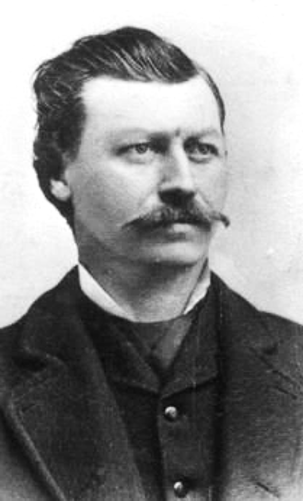
Finally, in appreciation of Felix Vinateri’s important contributions to nineteenth century South Dakota music, in 1981 the South Dakota Hall of Fame inducted him posthumously. (https://www.sdexcellence.org/Felix_Vinatieri_1981). Below is a photograph of Felix Vinatieri from the nomination.
References:
1. Stephan R. Ward. An Early Assessment of the South Dakota Oral History Project, South Dakota History Journal, Volume 1, Issue 1, 1970.
2. Tristan Irwin. Custer’s Last Band: Original compositions of Felix Vinateri, Custer’s legendary bandmaster To be he. Vermillion Plain Talk, June 8, 2001.
3. Ryan Landis. Doctoral Dissertation: Opera on the prairie: a biographical and musical analysis of Felix Vinatieri and the American volunteer. University of Alabama, 2017.


Comments