Carl M. Cornell: Surveyor, Engineer, Historian, Archeologist, Writer, & Conservationist
As part of the South Dakota Oral History Project, individuals from all South Dakota counties were interviewed in the 1960s through the 1970s. These oral histories present a window into the life of South Dakotans during the late nineteenth century and the early twentieth century.
This blog concerns Carl M. Cornell, a long-tern resident of Harding County, South Dakota. Professor Stephan Ward interviewed Cornell on August 4,1970. Selected excerpts of Cornell’s words from the thirty-five-page transcribed interview are presented in quotations. As a convention in transcripts of oral history interviews, I made no grammatical or spelling corrections.
According to the interview, Carl M. Cornell’s family moved to Dickinson, Dakota Territory in 1889 from Coldwater, Michigan and then settled in Harding County on a ranch twelve miles NE of what became the city of Buffalo, South Dakota. With just a fifth-grade education, as a young man Cornell was able to become a foreman building sod houses for homesteaders. He mentioned that a person could also make a living picking up bones from cattle who had succumbed to the preceding harsh winter. “They'd bring those bones in and, uh, yet as I remember they'd said a cent a pound for 'em. Bones in those days were in plenty places that use plastic now, use them for buttons and combs.”
Cornell also discussed that prior to the advent of settlers; ranchers grazed their branded cattle in the open range without fences. At that time Intermingling cattle on the same land was no problem. “The settlers came in there so thick that, that, uh, I had to give up the idea there was no free range anymore. They had to..now be careful, boy, be careful. There had been free range up there when I started in but the settlers came in.”
Moreover, Cornell mentioned the existence of ancient inhabitants’ petroglyphs (relief carvings in stone) in Ludlow Cave north of Buffalo. He noted that people, including Custer’s men, defaced the cave with graffiti. Referring to the petroglyphs, He stated “They cut 'em out. There's places where they, where they got this, where you couldn't put your hand on the wall, on the rock that would have been plain before you couldn't put your hand on the rock there. A lot of areas of that covering up somebody's initials.”
Cornell was a highway superintendent from 1919-1933 and then worked for Tobin Construction Company. Through the Works Progress Administration (WPA), he built the first highways in Harding County. During the Great Depression, Cornell oversaw Civilian Conservation Corps (CCC) camps and discussed the pros and cons of the program. He stated: “You know, giving a fellow a living that he doesn't have to work for, uh, is about the worst thing they can do to you.” Thus, while the program provided money for many people, it also stripped them of their dignity. Later in his life, Cornell was a surveyor and engineer, and worked on water storage projects including dugouts, reservoirs, and irrigation projects. In World War II he was a clerk for the Selective Services Board for three years.
Toward the end of the interview, Cornell discussed his family and friends’ recollections and involvement in the Messiah War (Ghost Dance War) from 1890-1891. He also befriended John Kirkwood, a veteran of the 1876 Battle of Slim Buttes. Cornell recounted that lying on a stretcher; the gravely wounded Kirkwood survived the trek from Slim Buttes to Deadwood. “And they carried him down and he rode a hundred miles in that and they were going pretty slow because the horses were played out and a lot of the cavalry, most of the cavalry had to walk. It was, I think, it was five days or something like that that they were on the road. No, no, uh, anesthetics or sedatives at all, you know or whiskey and tobacco.” Kirkwood lived for another fifty years after the battle. Cornell helped with the erection of the Slim Buttes Battle Monument that stands today.
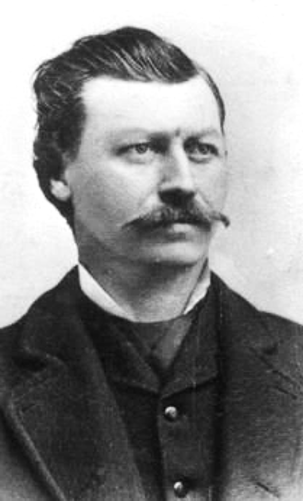
In 1978, the South Dakota Hall of Fame inducted Cornell (1881-1975) posthumously. The nomination cited that Cornell was a pioneer road builder, water rights advocate, conservationist, historian, and poetry and short story writer. In addition, the nomination noted Cornell’s life long and extensive work experiences as well as his appreciation of South Dakota western history and Indigenous culture. Moreover, “Cornell was a member of the Harding County Chamber of Commerce; Montana and South Dakota Professional Engineers and Land Surveyors; the Archaeological Society of South Dakota and life member of the South Dakota State Historical Society.” From: (https://www.sdexcellence.org/Carl_Cornell_1978). Below is a photograph of Carl Cornell from this website.


*The map is from: KENNETH W. ANDERSEN and J. KNOX JONES, JR., Mammals of Northwestern South Dakota. University of Kansas Publications, Museum of Natural History, Vol. 19, No. 5, pp. 361-393, January 18, 1971.


Comments