Search

Search this site
376 results found with an empty search
- Major strengths of the Chilson Collection
The Herman P. Chilson Collection of Western Americana is the largest book collection in the Archives and Special Collections and is frequently used by researchers interested in regional Native and European-American history. Other strengths of the collections, as stated in a January 1977 The South Dakotan article, are first editions, special editions, pre-Columbian explorations in America, early religious activities in our region, ornithology books, Norwegian books, S.S. Visher (early geographer) books, Willa Cather books, books about George Custer, and most significantly according to the article, John Neihardt books. Books in the Chilson Collection can be found using the USD library catalog. This collection is growing with new books purchased every year by the library and added to the Chilson Collection. Source: Library receives western Americana collection. Finest private library in Dakotas. The South Dakotan vol. 72 no. 1, January 1977, p. 12.
- Dakota Hall is 100 years old
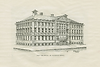
Dakota Hall was built in 1919. This image and description of the Dakota Hall appeared on the cover of a 1992 commencement program. During the 1980s and 1990s, USD commencement programs often highlighted USD buildings. The Archives and Specials has an almost complete set of commencement programs from 1889 to 2019.
- #AskAnArchivist Day is tomorrow
Please use #AskAnArchivist and @USD_AandSC when asking questions on Twitter so we don’t miss any of your questions.
- Archives and Special Collections
Look at the wonderful graphic that Tasha from our Technology Department created for us.
- Who was the first woman on the South Dakota Board of Regents?
Lulu (Mrs. E.P.) Wanzer may have been the first. She was from Armour, SD and was active in public health and the State Board of Health. A state summer camp for children was named Camp Wanzer in her honor. She was appointed to the BOR in January 1931 and served until her death in August 1931. Sources (These are in the Archives and Special Collections except for the Argus Leader and Find a Grave): Argus Leader newspaper, Sioux Falls SD, January 09, 1931, page 1 Coyote, USD yearbook, 1932, page 30 (A photograph of Mrs. Wanzer) Find a Grave (accessed February 26, 2020) South Dakota Historical Collections, volume 33, page 405, F646 .S76. (A short biography of Mrs. Wanzer) USD Catalog, 1931-1932
- Celebrate spring with the Mahoney Music Collection.
The first day of spring in 2020 is March 19th. Image from: Randolph Caledcott, Hey Diddle Diddle and Baby Bunting, London: Frederick Warne & Co., 1882?, uncataloged book in Mahoney Music Collection in the Archives and Special Collections. Mahoney Music Collection is a diverse collection of books centered around the violin located in the Archives and Special Collections at USD.
- Library humor from a 1940s University of South Dakota student publication.
What is more embarrassing than a Belch in the library? In the library a Belch rumbles through the corridors. It booms in the shocked silence. It echoes extra loudly. It startles the people and everybody looks at you, some disapproving, over the tops of their glasses and some laughing, behind their books, at your brick-red discomfort. For what is more embarrassing than a Belch in the library? A Belch, you know, is not exactly the mark of a Cultivated Person. In fact, a Belch is frowned on so sternly that most people would rather be cut in very small pieces, than let it be known that they Belched in the library. No one wants to be pointed out as The Person Who Belched in the Library. No one wants to be pointed out as a Person Who Belched at all. It is not a mark of Distinction to have Belched in the library. And changing the word to the less euphonious Burp is just silly. Oh! The ignominy of having Belched in the library. The shame, the disgrace, the feeling of failure, the realization the everyone Knows that it was you who Belched in the library. A graceful hand daintily covering your open mouth will not help. A blank, nonplussed look will do no good. A “who, me?” stare will not be effective at all. People will talk, But not to you. To you they will say, “You are no gentleman, sir, mainly because you Belch in libraries.” You are dishonored. Doomed to a lonely life, to sneaking furtively down streets and lurking in alleys. Afraid of having a little child point at you and scream, “There! There is the man who Belched in the library.” You are branded forever For, after all, what is more embarrassing than a Belch in the library? Published as “An Essay on the Belch” by R.N.W. in the Wet Hen, May 9 1941, page 5. The Wet Hen is a 1920s-1940s USD student produced humor magazine and can be viewed in the Archives and Special Collections. Happy Library Week, April 19-25, 2020.
- National Library Week is April 19-25, 2020
To inspire us, this “Library Work” poster from the American Library Association is hanging up in the Archives and Special Collections. ALA believes the poster is from 1926. Used with permission from the American Library Association.
- USD closed due a to viral pandemic.
It happened a little over 100 years ago. On October 15, 1918, through November 10, 1918, the University of South Dakota suspended classes and sent the students home in a effort to stop the spread of the Spanish flu. No regular students, staff, or faculty died. Seven soldiers on campus for SATC training were not so lucky (Cummins, The University of South Dakota 1862-1966, 1975, page 138). There was no hospital in town to treat the sick. For a list of histories about USD, contact the Archives and Special Collections. USD students, staff, and faculty, please participate in USD’s COVID-19 Experiences Project, and stay safe.
- Persuasive Maps
– are maps intended primarily to influence opinions and beliefs rather than to communicate objective geographic information. They are meant to convey a message. Persuasive maps can be divided into intentional and unintentional. The Archives and Special Collections has a few persuasive maps. Most are dated from the homesteading period and are from land companies, railroad companies, and immigration bureaus trying to convince people to obtain land in a particular area. I did find one persuasive map on a subject other than land sales. It is a 1916 map on South Dakota water conservation projects produced by a group called Call-to-Action. I will keep looking. Please let me know if you see a persuasive map in our collections. Sources: PJ Mode Collection. Cornell University Library | Division of Rare & Manuscript Collections. Tyner, Judith Ann. Persuasive cartography: an examination of the map as a subjective tool of communication. University of California, Los Angeles Ph.D. Geography Dissertation, 1974. Reformers & visionaries, scoundrels & incendiaries: 250 years of persuasive mapping. Catalog 3. Boston: Boston Rare Maps. 2019.


