Search

Search this site
376 results found with an empty search
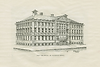
- University of South Dakota Buildings – East Hall
East Hall was built 130 years ago in 1877. It was the third building constructed on our campus. This image and description of the East Hall appeared on the cover of the 1981 commencement program. During the 1980s and 1990s, USD commencement programs often highlighted USD buildings. The Archives and Specials has an almost complete set of commencement programs from 1889 to 2016.
- University of South Dakota and a bright light in the sky
In September 1952, fans at an USD football game and some residents of southeast South Dakota saw an amazing light show in the sky. It was described in the Vermillion Plain Talk: "FIREBALL IN SKY FLOODS AREA WITH LIGHT ON SATURDAY NIGHT. Alert residents in the Vermillion area got an opportunity to see one of Nature’s more unusual displays – a spectacular ‘fireball’ – Saturday about 10 p.m. The flaming mass shot across the dark sky north of Vermillion, apparently headed northwest, exploded with such a burst of flame that even the spectators at the University football game noticed the light.” William E. Ekman William E. Ekman from the University of South Dakota Mathematics and Astronomy Department participated in the fireball investigation lead by C.C. Wiley from the University of Iowa. Ekman collected witnesses’ testimonies and searched for meteorites (pieces of the meteor that reach the ground) from an army helicopter. One report written by C.C. Wiley after the investigation described the path of the meteor, but it does not mention meteorites. Does that mean none were found during their hunt? Sources: C.C. Wylie and George E. Collins. ”The path and orbit of the South Dakota detonating meteor of September 27, 1952.” In Proceedings of the Iowa Academy of Science volume 60, article 63, 1953. “Fireball In Sky Floods Area With Light On Saturday Night,” Vermillion Plain Talk, volume LXVIII, number 12, October 2, 1952. Located in the Archives and Special Collections. “Meteorite May Have Landed in Volin Area,” Vermillion Plain Talk, volume LXVIII, number 44, October 16, 1952. Located in the Archives and Special Collections. “Scientists Study This Area for More Meteorite Evidence,” Vermillion Plain Talk, volume LXVIII, number 45, October 23, 1952. Located in the Archives and Special Collections. “U Professor Joins Party of Searchers for Fallen Meteors,” The University of South Dakota Bulletin, Series LII, bulletin number 1, Alumni number 11, December 1952. Located in the Archives and Special Collections.
- The University of South Dakota and Outer Space
In honor of the 50th anniversary of the first moon landing, I present a University of South Dakota / outer space connection: USD alumnus Carl Q. Christol (1913-2012) was a pioneer in space law. He wrote The International Law of Outer Space (1966) and helped negotiate the Treaty on Principles Governing the Activities of States in the Exploration and Use of Outer Space, including the Moon and Other Celestial Bodies (1967). Christol grew up in Vermillion SD, where his father was a history professor at the University of South Dakota. He graduated Magna Cum Laude with an AB degree in Government in 1934 from the USD, received a PhD in 1940 from the University of Chicago, and studied at the Fletcher School of Law and Diplomacy in Massachusetts, followed by a year at the University of Geneva and the Institute of Higher International Studies. Christol’s ideas on space law were articulated while he was teaching and researching at the U. S. Naval War College in 1962-l963. Much of space law was borrowed from sea law, especially freedom to fish on the high seas, freedom to lay cables on the high seas, and freedom to navigate on the high seas. Christol stated that one of the compromises reached by the Soviet Union and the United States during the negotiations for the 1967 space treaty involved private businesses in space. The Soviet Union wanted only governments to do space launches. The United States wanted private firms to have the same opportunities as governments. The treaty compromise does allow private firms in space, but the nation state of which these firms are nationals is responsible for any liabilities created by the private firms. This forethought allows SpaceX, Blue Origin, Virgin Galactic, and others to create and launch their own space vehicles. Christol was also involved in international organizations law and human rights law. He credited his world-wide perspective to his German-born father. Sources: Carl Q. Christol folder, Alumni Collection (USD2010.11), box 1, USD Archives, The University of South Dakota. Carl Q. Christol Interview, 2010, YouTube (accessed 5/23/2019). “Carl Q. Christol.” The Dakotan, winter 1967, p.18, Alumni Newsletters, Alumni Quarterly and South Dakotan Collection, box 5, USD Archives, The University of South Dakota. Fifty-second Annual Commencement, University of South Dakota, June 11, 1934. Commencement Announcements Collection, box 1, USD Archives, The University of South Dakota. Fox, Stuart. 6 Private Companies That Could Launch Humans Into Space. Space.com (accessed 5/23/2019). Hatton, Scott. Carl Q. Christol (1913-2012), memoriam. International Institute of Space Law 5/23/2019).
- University of South Dakota in 1982
What do you think of this great graphic expression of the University of South Dakota’s academic programs in 1982? The poster also lists the year each program starts. It was created by Wayne Knutson and is in the College of Arts and Sciences collection.
- First University Archivist
Herbert S. Schell was appointed the first University Archivist in 1968. He was largely responsible for organizing The University of South Dakota’s historical records into the USD Archives. Between 1968 and 1971, his extensive letter-writing campaign added the professional and personal papers of many prominent South Dakotans to the Richardson Collection. Schell joined the USD History Department in 1925. From 1936-1964, he served as the director and dean of the Graduate School. His definitive History of South Dakota is still widely admired, and his History of Clay County, South Dakota won an award from the American Association for State and Local History. In 1968, he retired from the Graduate School and was awarded the title of Dean Emeritus. The image is from the I.D. Weeks Library Records, 1993-. USD Archives. University Libraries. The University of South Dakota. The information is from the Faculty Files. USD Archives. University Libraries. The University of South Dakota.
- Help us find a Clay County, SD World War I book
I am hunting for a book titled In The World War 1917 1918 1919, Clay County, South Dakota or An Honor Roll Containing a Pictorial Record of the gallant and courageous men from Clay County South Dakota, U.S.A. who served in the Great War 1917-1918-1919. I have seen similar books for a number of other US counties, and I really want to know if one was made for Clay County. Please contact the Archives and Special Collections if you know where one is located. This book would be helpful for the annual Fallen Heroes student project. For this project, USD students gather information about Clay County military service men and women killed during war. These pictures are from the Minnehaha County version of the book. detail from front cover front cover title page
- We salute F. Belle Conrow during this #InternationalWomensDay.
She was active and influential in politics and public education in the early 20th century at the local (Vermillion SD) level and the state level. She also wrote for a local newspaper, the Vermillion Plain Talk, and taught school. 1866 – birth. Circa 1888 – graduation from USD and started teaching at Vermillion. 1901 – authored the history section of Peterson’s Illustrated Historical Atlas of Clay County. (We have a copy of this atlas in the Chilson Collection.) 1911-1914 – Clay County superintendent of schools. 1924 – authored Makers of History; Today and Yesterday. 1926-1930 – Clay County auditor. 1930s– authored 3 stories in Legends of the Mighty Sioux. 1931 – authored Picture Studies: Complete. 1937 – death. Her picture and obituary can be found at Find a Grave.
- This is a helpful book when reading difficult handwritten documents.
Sperry, Kip. Reading Early American Handwriting. Genealogical Pub. Co., 1998. RICHARDSON COLLECTION Z115.A5 R43 1998.
- There was a nuclear power plant in South Dakota for a short time about 60 years ago.
Image from South Dakota State Historical Society, South Dakota Digital Archives [D.O.I. 2010-06-18-007] The following collections in the Archives and Special Collections have information about the Pathfinder Atomic Power Plant: Ralph Herseth papers, box 61 Herbert Samuel Schell Papers, box 17
- Celebrate Preservation Week
For quick tips on how to save your audio tapes, books, film and home movies, data, textiles, documents, slides, photographs, and scrapbooks, go to http://www.ala.org/alcts/preservationweek/howto. Update: the link above is broken. Try https://lib.arizona.edu/about/news/5-tips-archiving-home-archivist.


